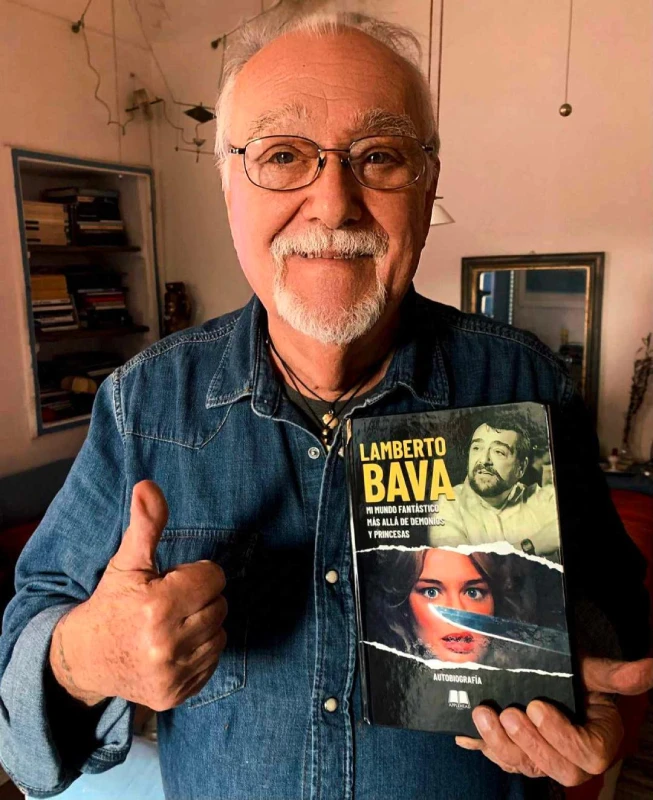
The name is essential in the history of European fantastic cinema. As the son of the legendary Mario Bava, a pioneer of Gothic horror and Italian giallo, Lamberto grew up among platos, cameras and special artisanal effects. However, far from living only in the shadow of his father, he was able to transform that heritage into his own style, developing a career that allowed him to become one of the great protagonists of the Italian terror of the 1980s and a real renovator of the fantastic television in the following decade.
After working as a management assistant with his father and figures like Dario Argento, Lamberto debuted with titles like Macabre (1980), where their inclination for intense psychological terror was already warned, in which the grotesque elements were merged with oppressive atmospheres. Global success would come with Demons (1985) and Demons 2 (1986), two fundamental works that marked a before and after in Italian horror cinema. Produced and co-written by Argento, these films were not only box office successes, but over time they were consolidated as a world-wide revered cult film for their audacity, their stylized violence and their metacinematographic character.
But Bava's career didn't stop there. He continued to cultivate the fantastic genre with works like A Blade in the Dark (1983) or Delirium (1987), where he mixed the suspension of the giallo with new, more extreme visual and narrative aesthetics, reflecting both his father's heritage and the modernization of the gender in a time of change. His vision, always risky and faithful to the creative freedom of the fantastic, made him a director capable of dialogue with the past and the future of gender cinema.
In the 1990s, Lamberto Bava was key to the rebirth of the Italian fantastic thanks to television. With the saga Fantaghirò (1991- 1996), a series of telefilms inspired by a Tuscan popular story, conquered family audiences from all over Europe, transforming fantasy into a popular phenomenon that demonstrated its versatility and ability to connect with new generations. This television success allowed him to consolidate a unique place: that of a director who, from the most extreme horror, also opened the gender to dream, adventure and myth.
In interviews and reflections, Bava has always defended fantastic cinema as a space of freedom, imagination and risk. His unwavering passion for the gender, inherited and reinvented, places him as a bridge between epochs: between his father Mario's Gothic classicism, the explosion of the modernity of Argento and the contemporary audiovisual that still drinks of his influence.
Lamberto Bava is, in short, an author with a voice of his own, a filmmaker who has been able to keep alive the flame of the Italian fantastic and project it to the world with personality and talent. His legacy, which combines blood, magic and visual poetry, occupies a place of honor in the history of European cinema.
Overview:
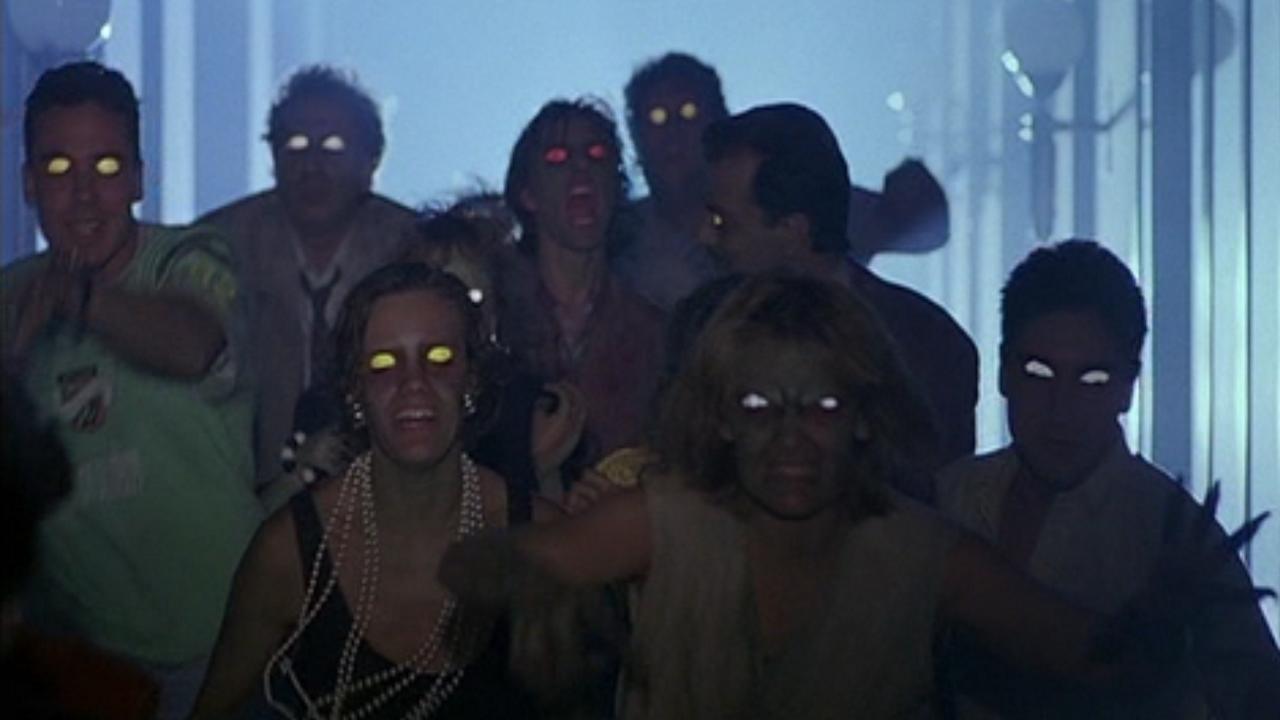
A group of people are invited to the presentation of a horror film in a theater. What guests don't know is that the film will come to life and the horrors of the screen will be nothing compared to the horrors in the room. Soon, a young woman is attacked by the decorated and begins to mutate into a terrible creature that attacks the other guests, making them living dead hungry for human flesh.
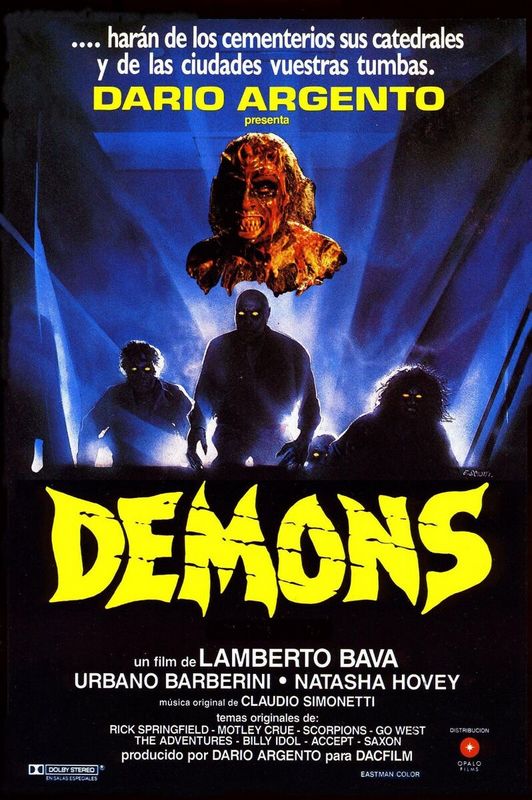
«They shall make of the cemeteries their cathedrals, and of the cities your graves.»He threatened Demons from his mythical poster, which promised an unforgettable and extreme terror session that he was more than fulfilling. The tape directed by Lamberto Bava and produced by Dario Argento was one of the last milestones of Italian-genre film, before the censorship by television stations almost completely annihilated that film full of fury and blood that he found in this film something similar to his swan song. But before, there was time to see a sequel also redeemable and that, over time, has also acquired cult status.
Technical information sheet
Original title: Demoni
Year: 1985
Country: Italy
Address: Lamberto Bava
Interpreters: Urban Barberini, Fabiola Toledo, Natasha Hovey, Karl Zinny, Fiore Argento, Paola Cozzo, Nicoletta Elmi, Stevio Candelli, Michele Soavi
Script: Dario Argento, Dardino Sacchetti, Lamberto Bava, Franco Ferrini
Music: Claudio Simonetti (with band themes such as Mötley Crüe, Saxon or Accept)
Photography: Gianlorenzo Battaglia
House of Culture. Pz. de Austria, s / n. 29631. Honey Arroyo. Benalmádena.

FICCAB © 2025 by agdezavisual 6/ Alejandro Ruiz