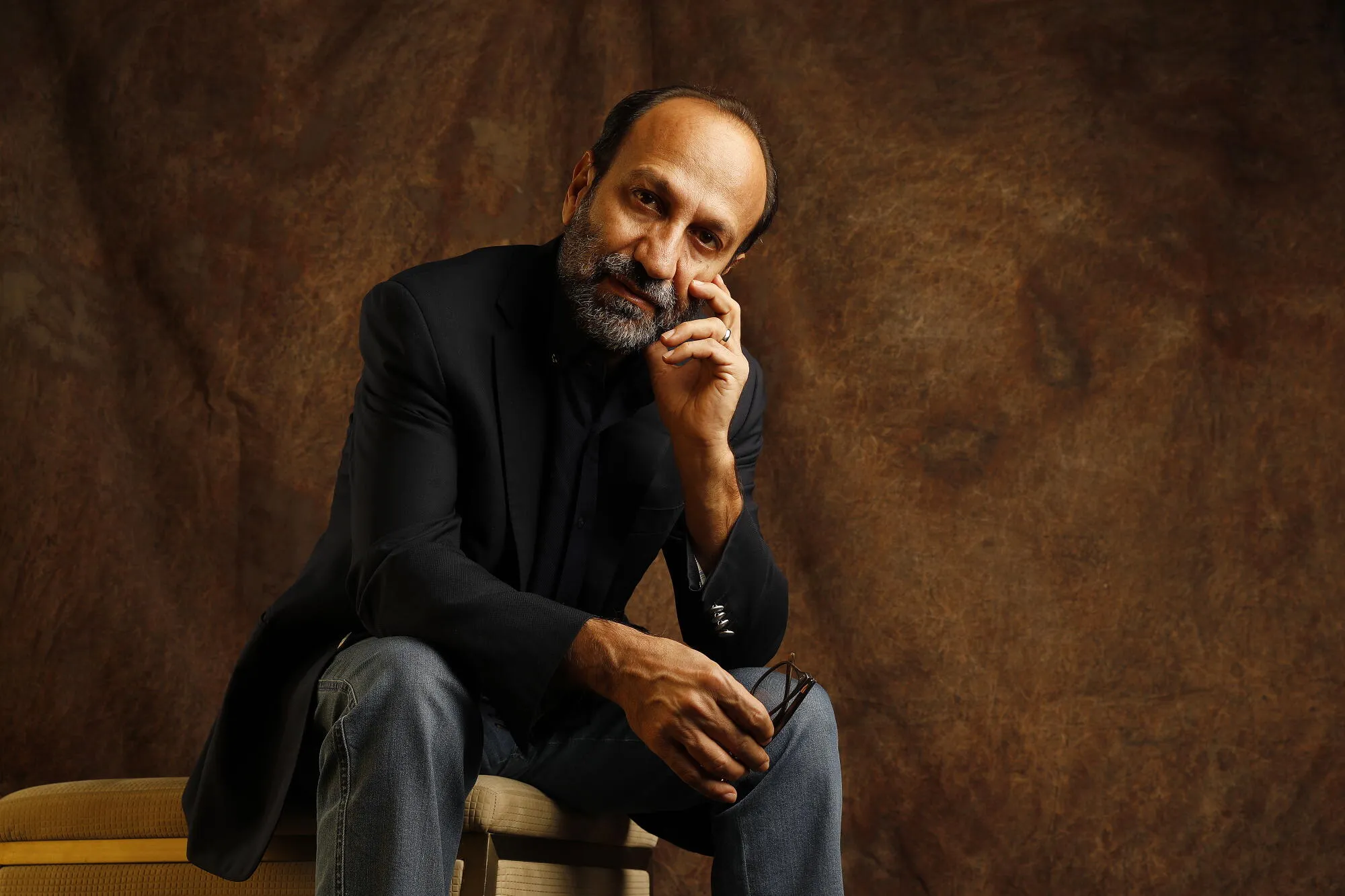
Few contemporary filmmakers have been able to explore human contradictions with the accuracy, intelligence and sensitivity of Asghar Farhadi. Iranian director and screenwriter, his cinema has turned seemingly daily situations (a separation, a lie, a debt, a disappearance, a family conflict) into exciting moral labyrinths in which the certainties disappear and each character seems to have at the same time reasons for being understood and reasons for being questioned.
Formed in Dramatic Arts and Direction, Farhadi began performing short films and working for television before debuting in the feature film with Dancing in the Dust (2003). Movies such as The Beautiful City (2004) and Fireworks Wednesday (2006) were defining a look of their own that would reach international recognition with regard to Elly (2009), for which he won the Silver Bear to the best director at the Berlin Festival.
But it would be Nader and Simin, a separation (2011) that would definitely place it among the great authors of our time. With it he conquered the Golden Bear of Berlin and the Oscar to the best non-English-speaking film, in addition to achieving a nomination to the Oscar to the best original script. Years later, he would repeat Hollywood's triumph with El Traveller (2016), becoming one of the very few filmmakers who have twice won the International Oscar.
Their prestige also knows no borders. Farhadi has rolled outside Iran The past (2013), in France, and All know it (2018), in Spain, bringing together Penelope Cruz, Javier Bardem and Ricardo Darín in the latter. His film also includes A Hero (2021), Grand Jury Prize in Cannes, confirming a trajectory closely linked to the world's main film festivals.
The secret of his cinema perhaps resides precisely in that Farhadi never offers simple solutions. His films work as watchmaking mechanisms in which a small event triggers a succession of decisions, secrets and conflicts. There are no absolute heroes or villains: there are human beings facing family, love, guilt, dignity, justice and the unexpected consequences of their own decisions.
With two Oscar awards, the Golden Bear and recognition in Cannes and Berlin, Asghar Farhadi has built one of the most solid and universal films of the 21st century cinema. His ability to transform the intimate into universal and to turn a moral dilemma into a real film suspension explains why his stories, deeply rooted in Iranian society, can drive spectators from anywhere in the world with the same intensity.
The FICCAB receives in its 25th edition a fundamental filmmaker of our time and recognizes its extraordinary career with the FICCAB 2026 International Prize.
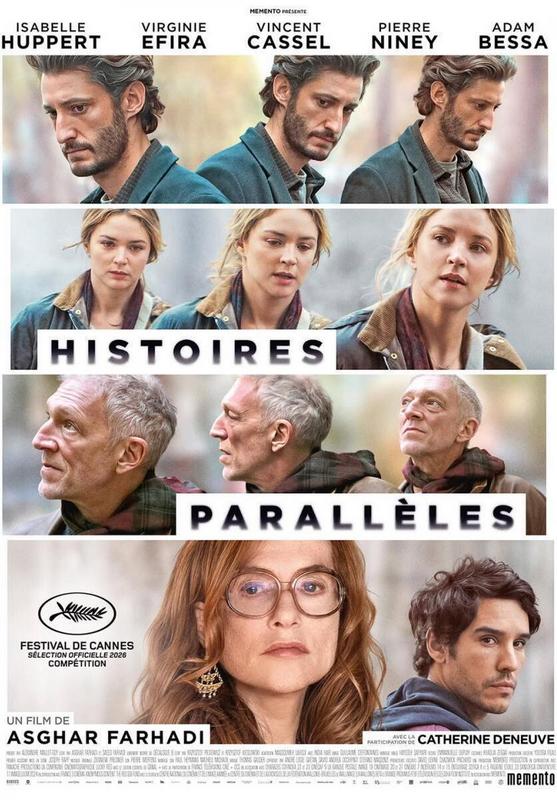
Overview:
Sylvie, a famous writer who is in a crisis of inspiration, begins to observe in secret her neighbors across the street. The couple's conjugal problems gradually become raw material for the characters of their new work.
At the same time, Sylvie hires young Adam to help her with her daily affairs, without suspecting that her arrival will end up altering both her life and her work. Very soon, the borders between what Sylvie imagines and what really happens around her begin to undraw.
Presented in official competition at the Cannes Festival 2026, Parallel Stories means Asghar Farhadi's return to the film shoot in France, 13 years after The Past
Technical information sheet
Year: 2026
Duration: 139 min.
Country: France / Belgium / Italy
Address: Asghar Farhadi
Script: Asghar Farhadi, Saeed Farhadi
Photography: Guillaume Defontaines
Assembly: Hayedeh Safiyari
Sound: Pierre Mertens
Costume: Oriol Nogues, Khadija Zeggaï
Production: Asghar Farhadi, David Levine, Alexandre Mallet-Guy
Producers: Anonymous Content, Memento Production, La Compagnie Cinématographique, Lucky Red, Panache Productions, France 3 Cinéma
Gender: Drama
Language: French
Cast: Isabelle Huppert, Virginie Efira, Vincent Cassel, Pierre Niney, Adam Bessa, Catherine Deneuve, India Hair.
House of Culture. Pz. de Austria, s / n. 29631. Honey Arroyo. Benalmádena.

FICCAB © 2026 by agdezavisual 6/ Alejandro Ruiz