The International Benalmádena Film Festival (FICCAB) recognizes the brilliant trajectory of Elvira Lindo, writer, journalist and writer, for a work that has marked several generations, with Manolito Gafotas turned into a popular Spanish culture
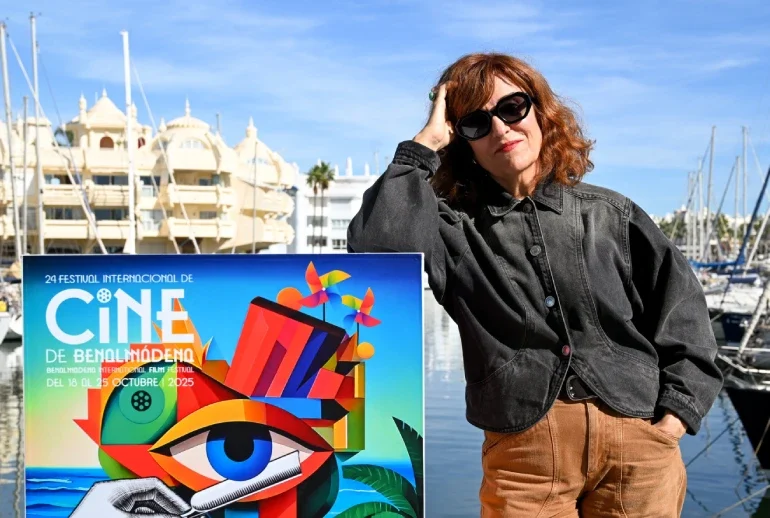
Elvira Lindo, writer, journalist and screenwriter, will receive today the award A Film Life at the 24th edition of the International Benalmádena Film Festival (FICCAB) at the closing gala. The festival wants to recognize a brilliant trajectory that has marked several generations of readers and spectators.
Creator of Manolito Gafotas, turned into a classic of Spanish children's literature that adapted to the large screen, Lindo has developed a versatile career that covers adult narrative, theatre, radio, television and cinema.
«Benalmádena is very linked to my memory»
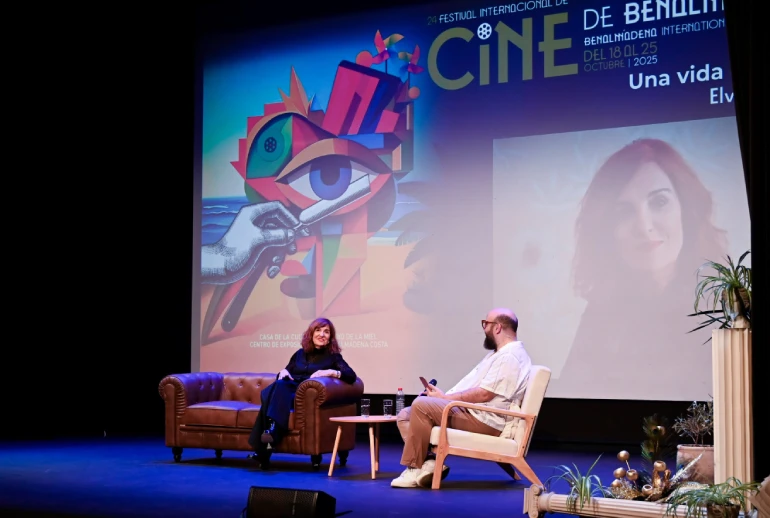
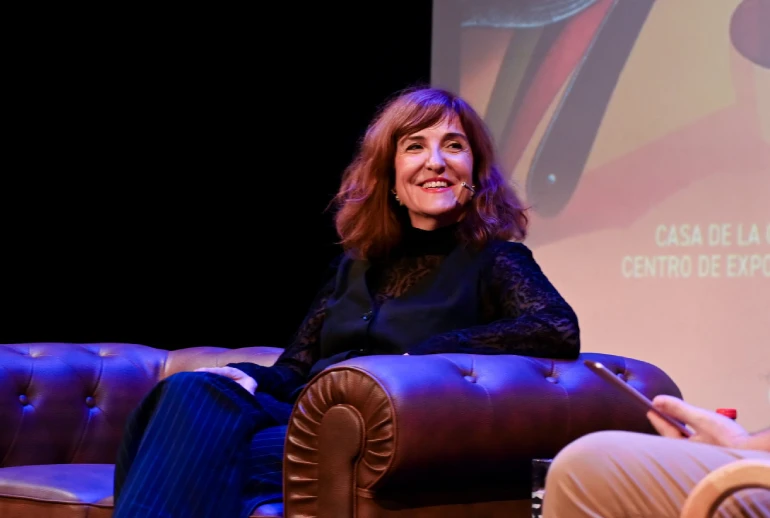
In a talk conducted by Juan Naranjo in the House of Culture, Elvira Lindo has confessed that «Benalmádena is very linked to my memory»as a young 23-year-old mother who lived alone in the city, creating «strong links» with. All the people who helped her take care of her son while she went to work.
Cute said he likes the name of the prize, because «A movie life is a life you can tell about has interesting adventures. So I agree with the name of the prize. However, my value in the world of cinema seems more debatable to me. Although I have written ten film scripts, I have had a discreet life in the world of cinema, as I have devoted more to writing books».
«Cinema has been a chance for me.»
«The cinema has given me the opportunity to get to know trades, processes and dialogues. I really like dialogues, because they have to sound good, even if they're not out of real life. When an actor or an actress has told me that it was up to him to say a sentence, I tried to change it, because maybe it was good for the novel. The cinema has brought me closer to people I like, who interest me and I understand their vulnerability.»He's insured.
«The radio was mystery.»
As for its beginnings in radio and vulnerability to public exposure. The writer has pointed out that «m spirit goes against these times. The radio was the mystery of the voice. I could make up who I was through my voice, for example a modern girl from Madrid. I felt safe without showing my image. Now, on the other hand, every time I show up on the radio, I get recorded for social media. They record me in my mother's village, on the radio.. I liked the world where they took you, and that's it.».
On the difference between writing literature and cinema, Lindo has stressed that there are «a big difference in writing thinking of images. When I wrote scripts, I was always alibi, because I thought what I wrote had to be cheap, so I didn't write torrential: there were not so many locations or weather changes, even though inside me there was much more fantasy».
«I made an actress out of him.»
On his incursions into the world of interpretation, he said he was glad to have made films like «No shame, by Joaquín Oristrell, as I appeared with Veronica Forqué and Rosa María Sardá, who were very funny, because the director let them improvise. They were very generous comics and they were about the work of making that funny.».
«At that time I went out in several movies and did it with a lot of moron. The cinema in general is full of Berlanguian things: I went to a movie, shot in a barefoot that looked like the moon and that was full of women with mustache, because the director had asked for it and a woman grieved me that I would not have taken it from me.», has added with humor.
Television scripts
On his stage on television, he recalled that he worked for Telecinco and was so ashamed that he wrote with pseudonym.
«On the radio I came to what I wanted: Radio 3. National Radio was the most, people listened to it and it was the best from both a formal and an alternative point of view. What happened was that on Radio 3, political opinions were uncontrollable and the Socialist Party decided it was just music, so many of us went to the streets. I was upset because it was a place where I was very happy.».
And it goes on: «A friend told me that they were looking for writers, that Telecinco had opened and I introduced myself there. They paid me a foolish amount of money and signed with pseudonym, because I was ashamed that my acquaintances recognized me. We made a trio of writers and signed with a pseudonym: Crapula Society Limited. I was hallucinating for a year. People took a lot of drugs there, but I didn't need it. I was behind that circus and it served me to see a change in the way I watch TV in Spain, as it had already happened in Italy.».
Manolito Gafotas, Spanish popular culture
As for the adaptation to the cinema of a recent myth of Spanish popular culture as Manolito Gafotas claims that «It was weird. The child's choice surprised me. I was imagining a more actor child. The boy was very tender: red, fat. But I expected him to have more interpretative skills. I think it was hard for me to play dialogues, have more bow, have to settle for it, which also happens sometimes with adult actors».
In any case, the choice of that child «It helped the film say more than the child, it had a good wrapper, an Italian film air with retro air of the 1960s. The film was very successful and still has an amazing audience».
The B-face of all that was that the producer «He took my rights. I was 15 years without the character's image rights. I had it from the books, but not from the image. A second film and a series were made, with nothing to charge.».
For Elvira Lindo, the problem of Manolito Gafotas «You can make it a very cheap thing. And the reality is that letting the popular play on their ground. Only I had the character's language in my head. The phrases I made up, they were not street phrases, it was not realistic, but something invented. Things like: World, deep silence, scientists from all over the world...».
In any case, Elvira Lindo claims that, today, «I don't trust anything that has to do with the audiovisual, because you have to live with disappointment all the time. You have a dream in your head, but when it's done, it changes everything.».
And he throws an exclusive in full rule: he is writing a series, which will be completely new and not an adaptation of one of his books.
About Elvira Lindo
Elvira Lindo, a writer, journalist and writer born in Cadiz in 1962, has a work that has marked several generations of readers and viewers. Creator of Manolito Gafotas, turned into a classic of Spanish children's literature, Lindo has developed a versatile career that covers adult narrative, theatre, radio, television and cinema, always with a style characterized by humor, irony and a critical look at social reality.
Distinguished in 2024 with the Gold Medal of Merit in the Fine Arts, Elvira Lindo is the author of novels as outstanding as The other neighborhood, A word of yours, What I have to live, To open heart or In the mouth of the wolf. His contribution to the audiovisual world includes screenplays for cinema and television, as well as collaborations as an occasional actress. A regular collaborator of El País and the SER Chain, his work has transcended borders and genres, consolidating it as one of the most influential voices of contemporary Spanish literature and culture.
Elvira Lindo has also developed a facet as an actress, appearing in different films and series in secondary roles always loaded with humor and freshness. His presence in titles such as The First Night of My Life (1998), Manolito Gafotas (1999) or Cachorro (2004) is in addition to memorable collaborations with directors such as Miguel Albaladejo, Joaquín Oristrell or Antonio Mercero. Among her interpretations are the Belinda cleptomaniac in The Open Sky (2000), the leading psychoanalyst in No Shame (2001) or Nurse Diaz in Plant 4 (2003).