Three works of worship of Temboury are carried out: thirty years of Psycho- lettes, twenty-five of Kárate to death in Torremolinos and twenty of them stole Hitler's spike.
Fantastic, terror, punk, surfing, martial arts and exploitation cinema make up a universe deeply linked to Malaga and the Costa del Sol
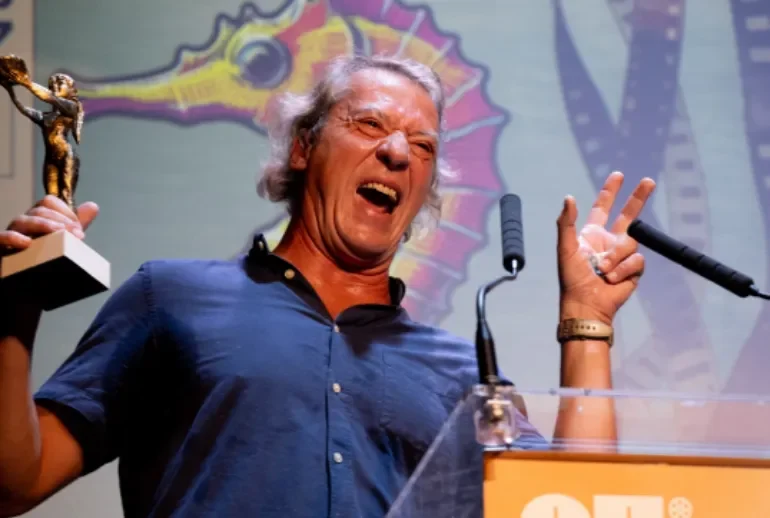
«It is very gratifying that so many years later people remember my films, that they start from the cachondeo and the desire to tell new stories», said Temboury
Photo: Ana Belén Fernández
25 years. Karate to death in Torremolinos. And the birth of the Benalmádena Film Festival (FICCAB). The appointment was required. On Monday, October 12, Pedro Temboury celebrated a marathon with the triple anniversary: 30 years of Psycho- lettes, 25 years of Kárate to death in Torremolinos and 20 of them stole Hitler's spike
Long live the cinema without prejudice!
Jaime Noguera, director of FICCAB, has highlighted that the filmmaker filled «The screens of zombies, karatecas, crazy cynetics, monsters and, of course, Hitler's virile member. Temboury believes that cinema must first of all be an adventure, in which enthusiasm and disshame matter more than money. Pedro is an archaeologist of popular culture, who turns his passions into films».
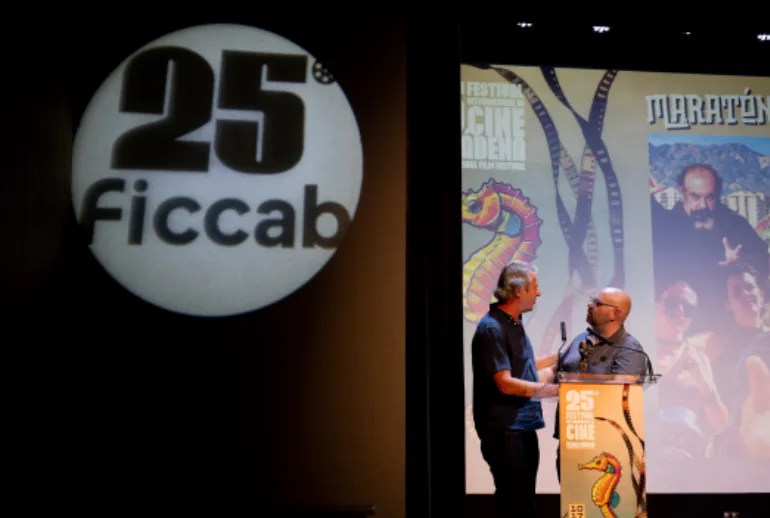
Temboury, who has been accompanied on stage by the Jocántaro monster, has thanked «the courage of the festival» programming their films, that «do not start from large meetings of investors who want to launch a new product, but from the cachondeo and the desire to tell new stories».
The director added: «I'm a fan of Jesus Franco and his low-budget movies. I started with a Super 8 camera to make movies with some friends, who helped me take those first steps. It's very rewarding that so many years later people remember my movies. Long live the cinema without prejudice! «.
A film without limits
Pedro Temboury's film doesn't understand limits. Castrating machines, resurrected karatekas, Catholic surfers, crazy scientists and even Adolf Hitler's incorruted penis are part of the universe of one of the most unique filmmakers of Andalusian underground cinema. The marathon recovers three of its most representative titles, united by black humor, terror, the B series and an uncomplex imagination.
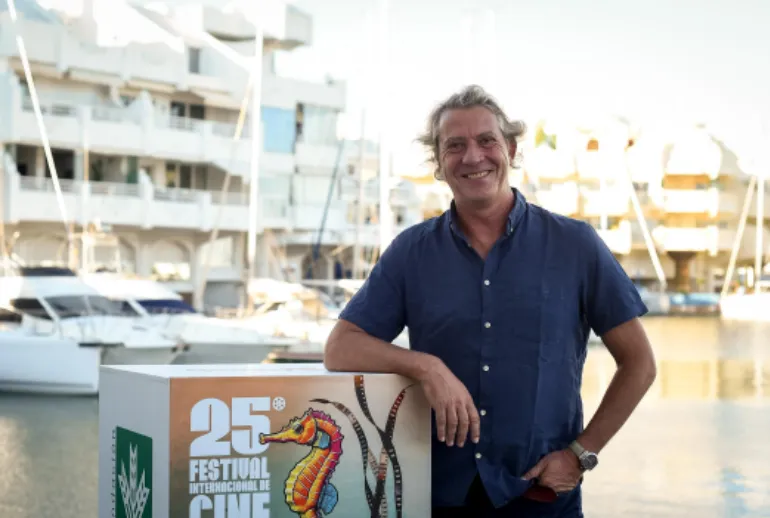
Born in Malaga in 1971, Pedro Temboury is a director, writer and producer. His passion for fantastic cinema, terror and exploitation cinema marked a developed trajectory on the margins of industry. Nieto of the historian and defender of the Malagasy heritage Juan Temboury, found in Jesus Franco one of his great references and worked with him as a disciple, collaborator and management assistant.
From this influence was born a way of understanding the cinema in which creative freedom, humor and taste for excess occupy a central place. Temboury moved that spirit to stories starring unusual characters and impossible creatures, with Málaga, Torremolinos and the Costa del Sol as usual scenarios.
Before making the jump to the feature film, he developed his particular imaginary in short films such as Life and Death of a record collector (1992), Psycho-lettes (1996) and Adolescent Generator (1998). Three decades after its premiere, Psycho- lettes allows us to return to the origins of a film that turned provocation and black humor into signs of identity.
Three films, three anniversaries
In Psycho-lettes, a band of mothers runs through the roads of southern Spain by attacking men and collecting their manly members as trophies. In just ten minutes, Temboury condemns much of the keys to his cinema: explicit violence, series B aesthetics and a bet on the nonsense that he does not seek to conceal his references, but rather celebrate them.
Cinco años después llegó Kárate a muerte en Torremolinos (2001), su primer largometraje y una de las obras más emblemáticas del cineasta. La película enfrenta a un científico loco, cuatro karatekas resucitados y una criatura mitad centollo y mitad pulpo en una delirante aventura por la Costa del Sol. Para detener sus planes, Jess, un surfista católico y célibe, reúne a un peculiar grupo de aliados. Artes marciales, zombis, monstruos marinos y humor absurdo confluyen en una película que obtuvo el Premio del Público de la Semana de Cine Fantástico de Málaga en 2002 y terminó convirtiéndose en un título de culto del cine independiente español.
En 2006, Temboury volvió a desafiar cualquier expectativa con Ellos robaron la picha de Hitler, estrenada en el Festival de Málaga. La historia arranca con el descubrimiento del miembro viril incorrupto de Adolf Hitler, conservado en una urna, y continúa con los planes de un científico nazi oculto en Torremolinos para crear un nuevo Führer. Neonazis malagueños, amazonas y conspiraciones se dan cita en una comedia que el director llegó a definir como «una mezcla de Frankenstein y Misión: Imposible a ritmo de verdiales».
Cine hecho desde la libertad
Detrás de la sangre falsa, los argumentos imposibles y la provocación hay una constante: el entusiasmo por hacer cine. Kárate a muerte en Torremolinos nació del empeño de sacar adelante una película con pocos medios, aprovechando las vacaciones laborales y dedicando después los fines de semana al montaje. Una forma de trabajar basada en la colaboración, la imaginación y la convicción de que no hace falta ajustarse a las reglas de la industria para contar una historia.
Con el tiempo, Temboury amplió su trayectoria hacia el documental sin abandonar su interés por las culturas alternativas y los personajes alejados de los relatos dominantes. En Monopatín (2013) recuperó los orígenes de la cultura del skate en España, mientras que La primera
ola (2015) se acercó a los pioneros del surf español. También volvió sobre una figura decisiva en su formación con La última película de Jess Franco.
Fantástico, terror, punk, surf, artes marciales y cine de explotación conforman un universo profundamente ligado a Málaga y a la Costa del Sol. La maratón reúne tres películas que permiten recorrer distintas etapas de esa trayectoria y reivindicar a un cineasta que ha hecho de la libertad creativa su principal seña de identidad.