Photos: Ana Belén Fernández
The International Film Festival of Benalmádena (FICCAB) has presented a special session LGTBIQ + with the projection of the documentary Arcoiris in black and white, directed by Fran Campos and produced by Kike Mesa
The film claims the historical role of Torremolinos in the LGTBIQ + movement in Spain, exploring their struggles, achievements and the evolution of their rights over time
For one of its protagonists, trans-Regina Varanski activist, «It is important that the new generations show stories that give hope»
The 24th International Film Festival of Benalmádena (FICCAB) has celebrated its fifth day, betting on diversity and claiming the rights of the LGTBTIQ + collective.
He did it with the film projection. Black and white rainbow (Fran Campos), who claims the historical role of Torremolinos in the LGTBIQ + movement in Spain, exploring his struggles, achievements and the evolution of his rights over time, making a journey from the near to the universal.
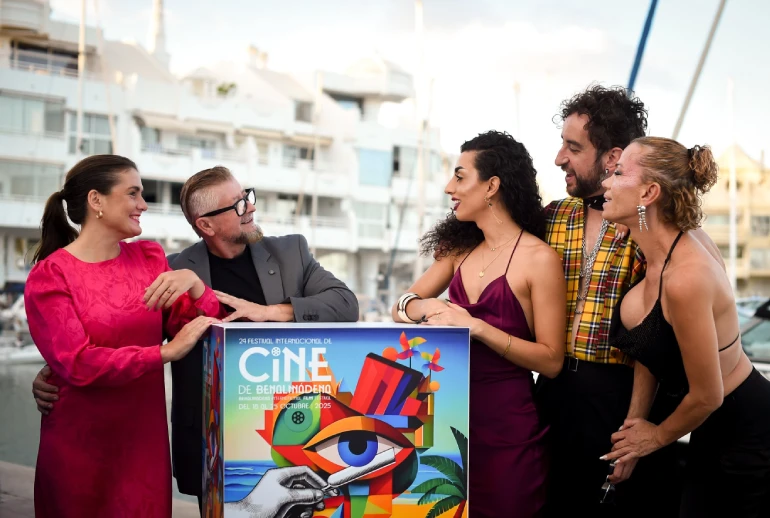
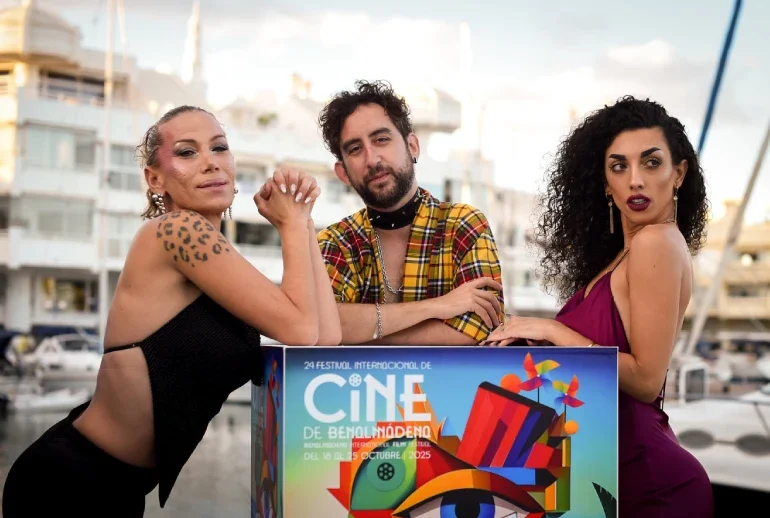
The event at the House of Culture of Benalmádena has been attended by its protagonists, Desire Vogue and Regina Varanski, Director Fran Campos and its producer Kike Mesa.
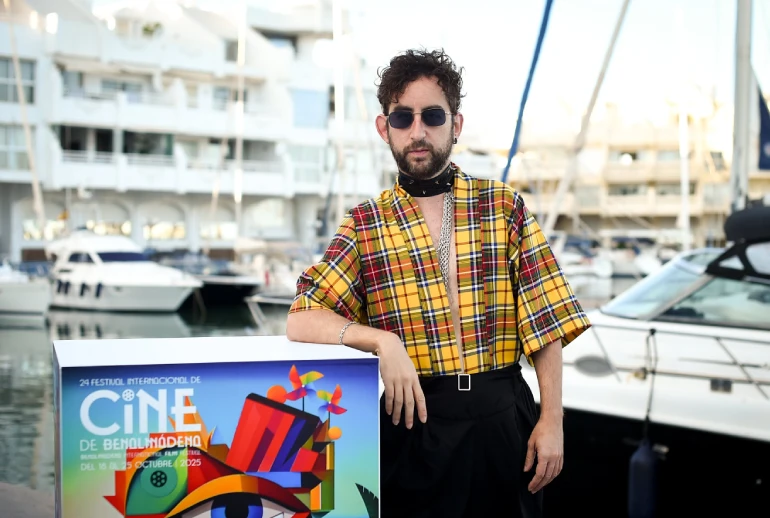
For the film director, Fran Campos, the origin of the documentary was that «We didn't know our story. We talked about the collective without knowing it. When I met Desiré, Regina and the other protagonists, I wanted to offer that perspective from different generations.».
And he adds: «Torremolinos would not be known without the LGTBIQ + movement, since the movement existed before the acronyms themselves, as it began in the 1960s. Personalities from all over the world went to the Begoña Pass. It is a reference that has not stopped growing. It represents one of the largest enclaves for the collective in Spain and the world».
Kike Mesa, producer of the film, has emphasized that «It was very important to tell this story, because the LGTBIQ + collective has much of its origin in Torremolinos, a space in which it has grown thanks to its struggle and commitment. From here a work has been done that ended with an impact across Spain and Europe».
Generational perspective
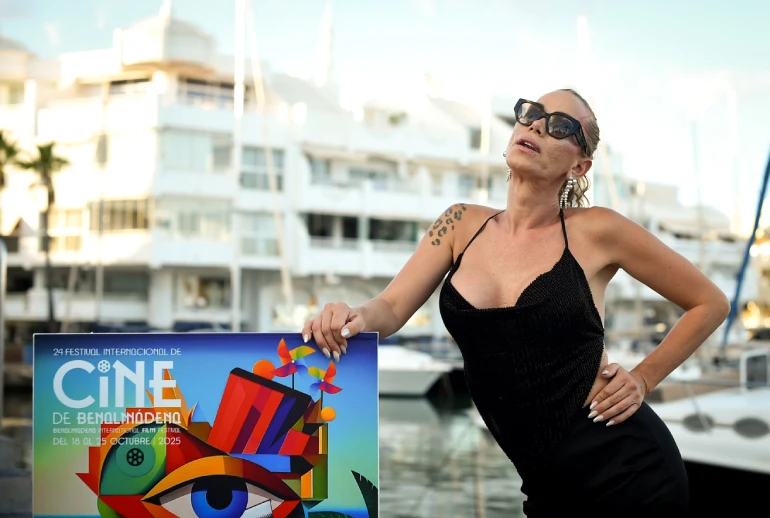
Desire Vogue decided «participate in this film, because there were thousands of stories and one of them was mine. I'm a woman who's run a lot, so others can move on. I had to immigrate from Majorca, because in 1991 being trans was a problem and society abused us, killed and sold».
«We are now taking steps backwards in our rights. I don't ask anyone to support me, but I do.. The film brings the raw reality of thousands of stories. To this day we continue with a very high rate of transphobia».
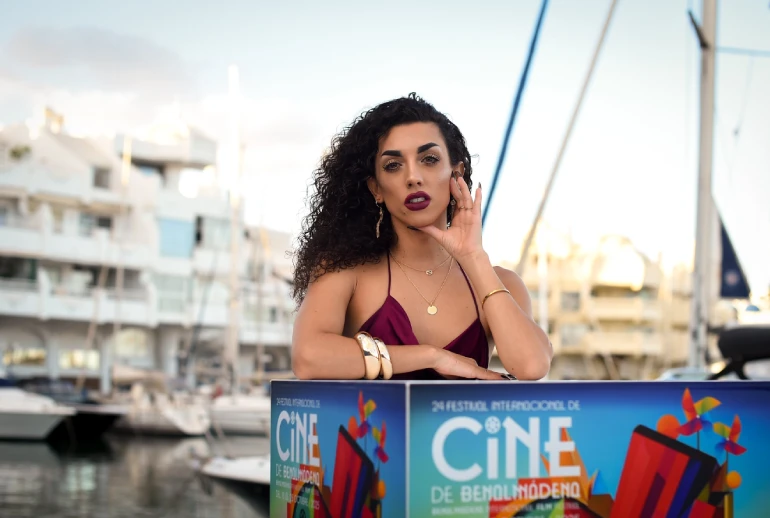
Stop Regina Varanski, «It was important to participate in this documentary, because the more testimonies about transitions, the better, as there are as many transitions as people. It seems that society dictates how such transitions should be to fit into certain profiles. We have Desiré and I, who are two quite opposite poles, is interesting.».
«The Poison series reaffirmed me very much as a woman and its generational perspective reminds me and Desiré very much, as we have a relationship similar to that of Cristina and Valeria. I very much wanted to tell another perspective, which was not a tragedy, but that of two trans people, like Daniel and I, who are marriage. It is important that the new generations show stories that give hope«.